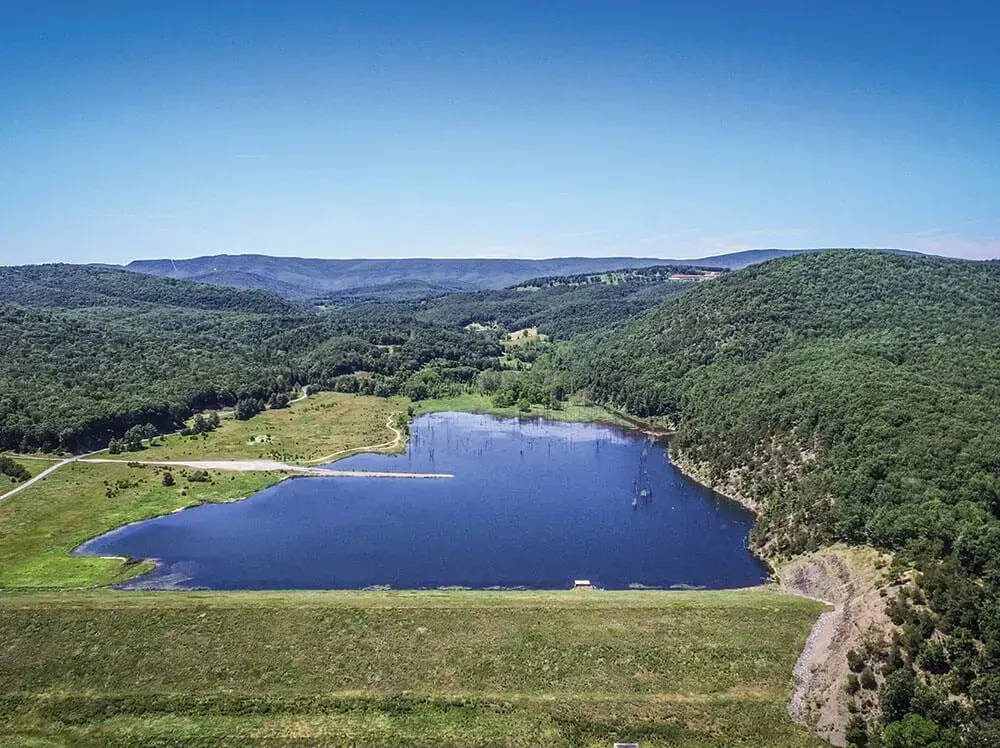
The state was planning to dam the Kimsey Run and the rising water was going to submerge the burial ground. We pulled up to what appeared to be a clearing on the edge of the forest with a large, bulldozed swath in the middle as if someone was preparing to pour a foundation. With your back to the forest, you were looking across the floodplain that sloped gently into a flat a few feet above a lazy river. Turn and look upland and you were looking along the bend of a small creek that flowed out of the hollow.
The term “hollow” has an empty, gloomy sense about it, although it simply refers to the narrow, steep-sided valleys that create the creases and wrinkles throughout Appalachia. I’ve found their murky reputation to be more anthropological than connotative. You find some spooky folks up in the hollows.
This particular hollow produced the bulldozer operator who had cleared the site for us, and was good enough to give us an account of the people whose graves we were helping to find and relocate. He ambled up on our work site after he saw us pull in, walking like he was trying to avoid the pain of whatever was ailing him, which seemed to be his whole body.
The site we were working was estimated to be eighty years old, and here’s what Clem shared:
The father of the household was a man named Benjamin Clutch. He was a small, dark man married to a woman by the name of Ella Gene who stood taller than him by a hand or two. Benjamin was a mean son of a bitch who, when he took to drinkin’ — which was most of the time — was known to give his wife a good workin’ over, despite her size. The couple produced three daughters, none more than two years apart, and Benjamin took to sharing his abuse with them. Not long after the last was born, his wife died, leaving him to raise three girls.
As it was told, “Benjamin got him a nigger woman to come and tend to the girls. The five of them lived together for a spell before, all within the same year, all three girls died, leaving Benjamin alone. With his pregnant nigger woman.”
When his son came, Benjamin was torn between having a half-breed son and having no son at all, but his favor swung toward having a namesake. He raised the boy in the same cold-hearted way he’d treated the women in his life, and by the time the boy reached his teens, there had welled up inside him a cold, quiet hatred for his father.
One evening Benjamin came home liquored up and took to giving his son a beating. But his son was half man by then — and that half was fed up enough to go fetch the hatchet from the woodpile and bury it in Benji’s neck.
We thanked old Clem for the colorful tale and took to clearing off the cemetery. There are usually threads of truth in the backwoods stories, and sometimes it’s the only shred of history you have to animate the dead objects you find underground.
Our job, after the topsoil had been scraped away, was to clear any remaining organic soil down to the clay bed underneath. Once we got to virgin clay, we could articulate the grave pits by looking for discoloration between the clay and the fill of the grave.
With the ubiquitous Marshalltown trowels in hand, we started scraping. It was easy to know when you hit the virgin clay — harder and lighter than the organic soil overlaying it. As our patches of light-colored clay grew, there within them, just as purported, were the lines of demarcation between the grave pits and the clay.
What was remarkable was that it was no fuzzy, difficult-to-distinguish border, but a perfect hairline between the two soils. Each grave pit was perfectly articulated.
And there were five: one medium, one large, and three little ones all in a row. All five of the Clutches, just as Clem described them.
And where was the son, we’d asked Clem. “No one knows. He up and got outta here after he killed his Papa. Probably long dead by now.”
Probably.