I was thinking about the way that we lose time to our turbulent inner states. We interact with people day-in and day-out, often with little idea of what's going on with their inner climate, and they with little idea about ours. And so many little things screw with us, the stuff no one sees, minor manias.
And then I started thinking about that as a concept—minor manias. Not the major maladies that disrupt the shit out of our emotional state, but the little things that sneak by undetected.
I thought about the people who are quietly unraveling because of the news in the world today. I see this in people online, among friends, and I overhear it at the café. Unless there's something to actually do about it, this distress just lingers as a minor mania.
You know who endures crises well? And who keeps their mind attuned to the small triggers of large solutions when they appear? People who know how to maintain calm in the face of extreme circumstances. There's a practical argument for tending to these little things that steal our inner peace. Hysteria, external or internal, and at any scale, rarely reveals the path to change. Hysteria jumps from the 35th floor window just as firefighters appear in the door to the stairwell.
The world is a fucked up place politically. We are enduring the chaos of several mad kings and there isn't a whole hell of a lot we can do about it. And for some people, the powerlessness is as unbearable as the situation itself.
This is not an exercise in calling out people less composed than myself. It's just easier to approach a concept from a position of strength and certainty. I have minor manias of my own. Anxieties and fears. Occasional fixation on doom. (And don't get me started on the shortcomings of my unhealed attachment issues, now largely wrestled into submission, though only with a smidgen more energy than the force of their resistance. That's another story.)
The crazy thing about these little manias is that you can have one in the middle of an everyday scene — coffee with a friend, on a tram, or in a business meeting — and no one will ever know but you. Plus, we get so accustomed to the smaller deficits in our nervous system's wiring that they become invisible even to ourselves. This erosion of peace is just part of who we are. Our personalities. Our quirks. These minor manias come and go, and really, how much harm do they do?
This kind:
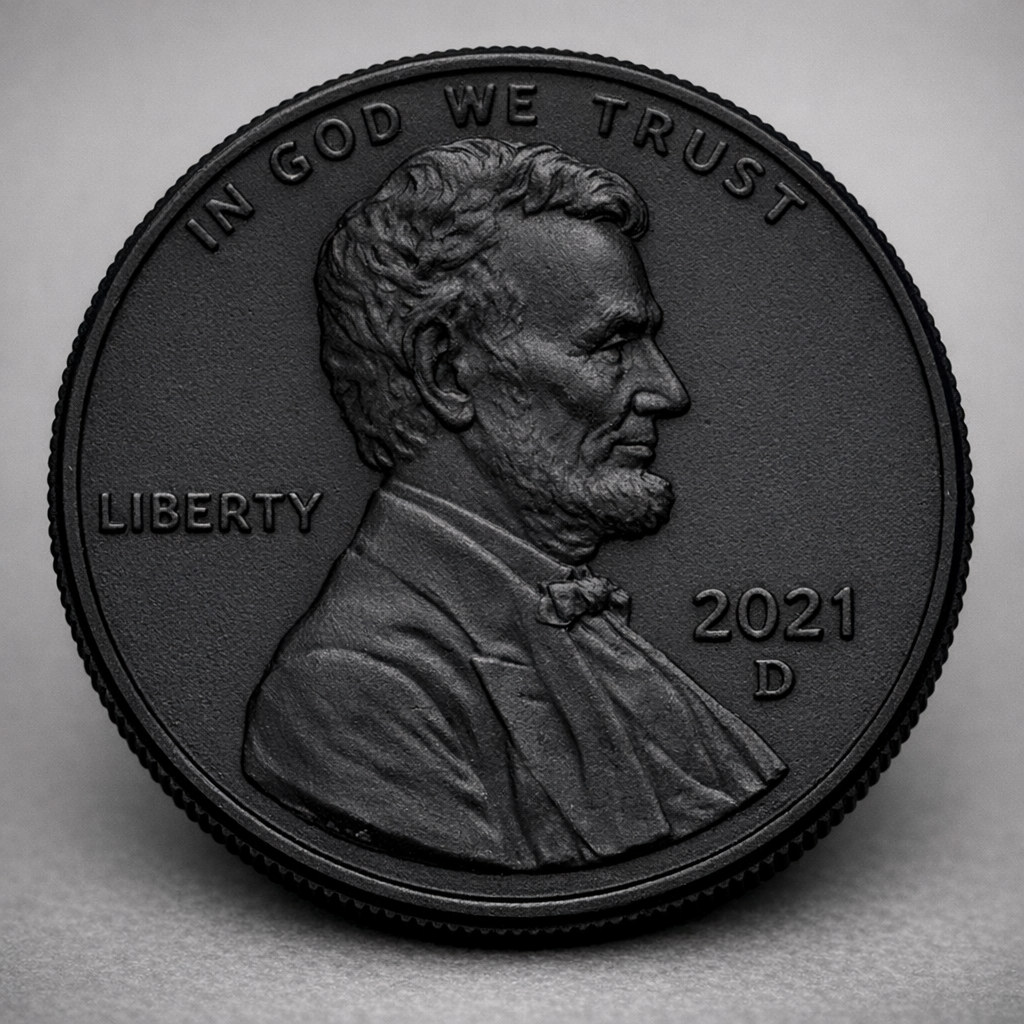
Picture the days you've lived as pennies saved in a 15-liter glass bottle. But every time you have a day tainted by minor mania, you paint that day's penny black. Then you drop it in.

You get a fixed amount of pennies and the jar is so big and so slow to fill that you lose sight of the fact that: it's all finite. It all will one day end.
And you turn around one day and realize that the jar has more pennies in it than space. And, Jesus Louise-us, look at how many of those pennies are black. That's the insidiousness of minor manias.
We often look at people suffering more acutely (and my heart goes out to them) and think, "goodness, it could be so much worse." But comparing minor, mid, and major as a justification for dismissing the little things that gnaw at an otherwise lovely day is just a recipe for accumulating black pennies.
I know I can't do anything about the black pennies already spotting my glass bottle, but lord willing, I have a few pennies left to drop. Doing everything I can to keep them shiny seems like a sensible thing to do.
If you read this whole damn thing, then thanks for bearing with me. Now that I'm past the midway point of my own penny jar I think about these things a lot. There is no way to jump back and inject this perspective into my 35-year-old brain, but that's OK. He did pretty well (save for some of those spasmodic attachment issues). When it comes to the things I can choose to dismiss (health worries, money worries, state of the world worries) I do everything I can to notice them and dismiss them if they are unactionable.
Life has shown me many times how important this is. Maybe most acutely on the days when my work duties included cleaning up after someone's suicide in Alaska (link below), or setting up flowers at a funeral home in California.
 Chip Warren
This time in my life is about getting serious about the things that really matter to me—one of the ways I polish my pennies each day—so if you enjoy my notes, consider sharing one of the dispatches that resonated for you, or subscribe to the Substack publication. I'm stepping out, People. The novel drops in November and I gotta get loud.
With love,
Chip