I’ve been circling an idea for a while. It touches on writing, but it runs deeper. The deeper part, its connectivity, its cosmic universal aspect, just occurred to me. Let me start with the start.
There are two fundamental aspects to writing (see note below about the lie of binary), and what pushed them into measurable relief for me was during my experience as a pre-WGA screenwriter in Los Angeles. I won’t get into that personal history right now. Suffice to say that I came up with a paradigm, based on a metaphor, based on a reductive notion of two professions about which I know very little.
This gimmick of perspective helped me advance my craft, but just this morning I was sitting on my balcony in Budapest, wondering if the reasons I haven’t been hearing the blackbirds in the morning has something to do with the looming heatwave, when it dawned on me that the paradigm applies not just to scripts, but to all writing, and in fact, to life itself.
Let’s start with the writing part. Here are the two aspects:
- What you want to say, which is the architecture
- How you get it said, which is the engineering.
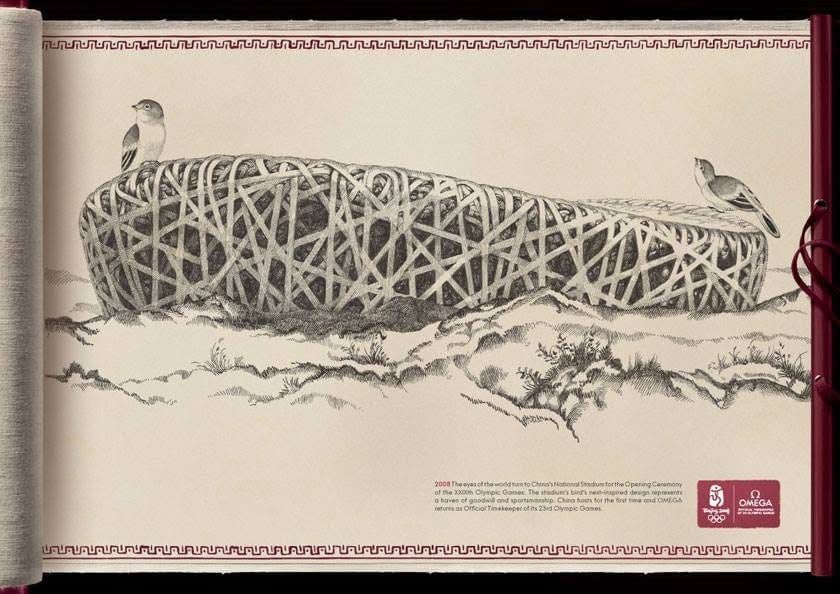
The first phase of this idea hit me when I was doing a project at Arup, the firm that brought you Beijing’s Bird’s Nest, the Sydney Opera House, and the Centre Pompidou in Paris. Don’t be impressed. I was just a dumb filmmaker, but I like to learn things so I asked about everything that goes on in this crazy impressive building of glass and steel and super comfy chairs and ping-pong tables in the breezeway. I learned a few things, but what stuck with me was that Arup wasn’t just an architecture firm but that they did engineering too.
I asked if it was a common thing to house both disciplines in one place. I’d always thought of architecture firms as sparse, minimalist offices with Swiss stylings where people wore turtlenecks and drank coffee from ridiculously small mugs. (I did learn that wasn’t always true when I was working for the City of New York, and I learned that many new architecture grads sit in drab cubicles designing government buildings where scores of people will work in drab cubicles.)
But architecture firms? Stuffy, prim, perfect lines and invisible lighting. How do engineers fit into that tribe? That’s when a kind man dumbed it down for me.
He said, “architects design stuff, engineers figure out how to build it.”
Made sense. Then when I was driving home, it occurred to me that writers are both engineers and architects.
I think this idea bubbled straight to the surface because in addition to being a documentary filmmaker, I was also in the middle stages of my screenwriting endeavors, working with an honest-to-goodness literary manager who had taken notice of my writing.
(I’ll never forget the first time I heard the words “You’re a talented motherfucker.” It was in East Hollywood, and I was standing in front of my bathroom mirror. But Lucy, my manager, seemed to affirm that, albeit with less emphatic language.)
By the time I achieved this professional engagement, (which was about sixteen years after I wrote my first screenplay) my architecture was sound. I came up with good stories, compelling characters, and I understood internal and external conflict, narrative arcs, and all of that. But I was still working on mastering the page craft or, put another way, figuring out how to build the story. Structure, pacing, the joy of eliminating pages that brought you joy to create.
When I realized how distinct these two aspects of the craft were, with everything I wrote thereafter, all of the drafts that came after the first were less painful. I graduated from the myopic tendency of young writers to believe that any critical feedback of their work is a personal insult. I exaggerate, of course, but having been an emerging writer, and later having worked with dozens of them, I can also say that, at least in those early days, critique sucked.
But with my new paradigm, I realized that most of the feedback — the good quality feedback — wasn’t aimed at my architecture, but at my engineering.
Most advocates for your work will invest their time and effort because they see something in you. And that little je ne sais quoi is a sense of story, a talent for it. Or maybe they see a version of themselves, back when they were wide-eyed and eager and didn’t know fuck-all compared to what they thought they knew, but were willing to put in the work. Grind out the pages. Write and rewrite. Regardless, they begin with the belief, or at least the assumption, that somewhere beneath all of those fugly pages is a story. So when they give you even a page or two of notes, as long as the feedback isn’t Have you considered dentistry? then they see something. A glimpse of a story.
But the million dollar question is: how do you get at it? How do you make it better? You know what you want to say, but how do you get it said?
Usually, you work on the engineering. You attack everything that is standing in the way of someone experiencing your story. And as you do that, you will undoubtedly discover things you can change about your story to improve it, to make it deeper, to get at the truth.
The revision starts with the writer believing in the story and then toiling over the mechanics of its delivery.
And now we get to the part of this formula that really brings it home, and it gelled for me only 13 years after that first part. (What can I say? Life lessons come slowly from experience, not swiftly from self-help books.) This is where my metaphor might alienate a big swath of my massive readership, but I suppose that’s okay because they aren’t writers. They’re architects and engineers.
But here’s the first part:
Architecture is of the heart and engineering is of the mind.
And the second:
Architecture is talent and engineering is skill.
Skill is developed and it enhances the talent.
Skill works on behalf of talent.
I often come across the debate of whether or not great writing — or any other craft — can be learned and developed through raw grit and determination. My answer, is:
Maybe.
But there has to be some talent there to begin with. Something that makes your stories uniquely you. Art has a human soul1. Full stop. Try to prove me wrong.
Talent can be slow growing, like me and Bono (I kid, but look up his sentiment about listening to With Or Without You). Or it can be big, immediate, gushing, and fast burning. Think of the 27 Club. But some talent has to be there.
Apologies for that painful truth.
But here’s another truth that will soften that one: everybody has talent of some kind. It’s just a matter of finding it. On my way to becoming a writer, I considered comedian (age 7), saxophone great (age 11), eel fisherman (age 12, true story), rock star (age 13 to 18), to name a few. It’s okay if you try writing and discover you have zero talent for it. Try other shit. Be fearless in your trying.
Here’s one more truth that will really soften it: this is just my opinion, my observation. And against the backdrop of all acquired human knowledge, my opinion is insignificant and it’s certainly not the truth.
That said, I do think that understanding the interplay of heart and mind, and the following ideas about how to prioritize their signaling, will help anyone develop their craft, whatever their craft might be.
It took me years of living before I really started to understand the interplay of signals arising from our heart/gut and those that originate in our minds. I wish I pegged this early, but so be it.
I don’t know the true source of our intuition, but it feels like these signals come from the heart or the gut. Scientists say it has something to do with all the nerves that converge somewhere in your middle parts. Maybe. It’s mysterious. It’s the thing that you know without knowing. It’s a soft voice, but it never lies. It’s the old desert sage playing a slow game of pool alone in the high desert dive bar. Our brain is the loud one sitting on a bar stool chatting, chatting, chatting. It hardly ever stops, but he’s okay. (Mine is a he. Yours is, well, you know.) He means well, and parked outside is his truck where he keeps a pretty remarkable set of tools.
The heart warmly ponders the magic of the human mind — all mush and electricity — while the mind will spend the afternoon explaining the human brain, until it no longer seems mysterious.
This is heart and mind.
In our modern era, and maybe it’s been this way for ages, hard for me to say because I only recall living in this one, we’ve become far more oriented with the human mind as our beacon and our guide. Think up a plan, chart the steps, initiate and implement, iterate, build, and grow. The mind does all of these things remarkably well, but the mind has no beacon. None. I don’t know why. It can create something that looks like a beacon and convince you that it’s true, but a beacon constructed by the mind is like a clock with no gearworks. It just looks like a clock.
Our intuition, our gut, is an extraordinary beacon, incredibly powerful, and it is accurate beyond measure, but we’ve learned to ignore it.
If you doubt this imbalance in the application of our resources, consider the existential crisis of people who have played by the rules, made all the right moves, who planned and built and grew in all the celebrated ways, only to find that something’s still missing, only to find that joy is elusive.
Your mind can build an extraordinary house, but how do you know it will be a house you’d enjoy living in? You have to consult your architect. It sounds clever, but it’s true.
Consider the following:
You’re standing in waist-high grass and the summer sun is far overhead, no clouds. Your water ran low at camp that morning, so you walk to a small rise and survey the landscape before you. And there in the middle distance you see it — a small spring, or at least a cluster of greenery with a stream snaking the grasslands to the south. An impulse rises. The spring is your salvation, and if you reach it, your most essential needs will be met. The message is undeniable. Then another impulse. A pang of fear, the awareness that there are predators lurking in the grassland, and to reach the spring safely you must be clever. You must form a plan, and if you execute it to perfection, cool, clear water awaits.
This remarkable system, supported by opposable thumbs, has allowed us to thrive in a world that would be happy to eat us.
Much has been said about how the world has changed since the amygdala was designed and how it is still running on an old operating system, so I will cut to the thing that I learned after years of blindly letting these two siblings fight over the driver’s seat.
(Closer to the truth, the mind is the one ready for the struggle, and the heart doesn’t really put up much of a fight. Ignore me at your peril, wise one. The heart takes the path of least resistance, and climbs quietly into the backseat (it’s a twin cab work truck, by the way) and dozes off, glowing a sickly gray-yellow glow that is unsettling to the mind, but the mind ignores it. The mind is driving. That’s what matters, according to the mind.)
Oh yeah, cutting to the thing:
In our modern era, too many people have tuned out their heart. The advice to “follow your heart” has become so cliché that you can’t give it away on a bumper sticker.
Achievement is measured by a matrix of the mind’s design, and it’s not a this-or-that equation. Nothing in the natural world is truly and absolutely binary except Binary (computer nerds will get that.) It’s this-and-that, and I’m happy to finally, after all this rambling, reveal everything you need to know, both about writing and about living a happy life:
We messy, contradictory, beautiful creative beings will find the path to our most meaningful life when we learn to listen to our hearts and then put our spectacular minds to work for the heart. Trust the heart’s beacon, not the gutless clock.
It’s what got us this far. That’s precisely how we reached the spring. That is, those of us who didn’t put water lust above all else, only to quickly succumb to natural selection. It’s really that simple, so I won’t write another five hundred words to explain it. Live by it, and the edict proves itself.
But wait, wasn’t this an essay about writing and whatnot? It was, and the connection is also simple.
As storytellers, the stories we are meant to tell spring up from the heart. Those are the ones that we can’t shake, that for some reason we are burning to tell. We gush them onto the page, and the mind gets to work, applying the engineering. That’s craft, and mastering it takes time.
But once you understand the two part process, once you separate them and love them both, then writing, revising, learning, iterating… it all becomes a joy.
Churning out true crime because it’s hot right now, regardless of the fact that you love Gothic love stories, is just the mind running amok. And even if you write a best-selling detective series, ten years down the road you’ll find yourself leaving a book signing at Crime-a-Con wondering why you feel so empty. Then you’ll eddy out at a dive bar, pouring whiskey into the void. But if that’s where you find yourself — with writing or anything else — don’t despair. Get some quarters from the bartender and go ask the old-timer at the pool table in the corner if he fancies a game.
He will always say yes.
That’s also why, for now, writing rendered by artificial intelligence is either immediately or eventually recognizable. It’s all engineering and the architecture is pure mimicry. Artificial intelligence is a long way from being able to approximate the human heart. Which is why I don’t believe much of the hysteria about its encroachment on the domain of creatives. ↩