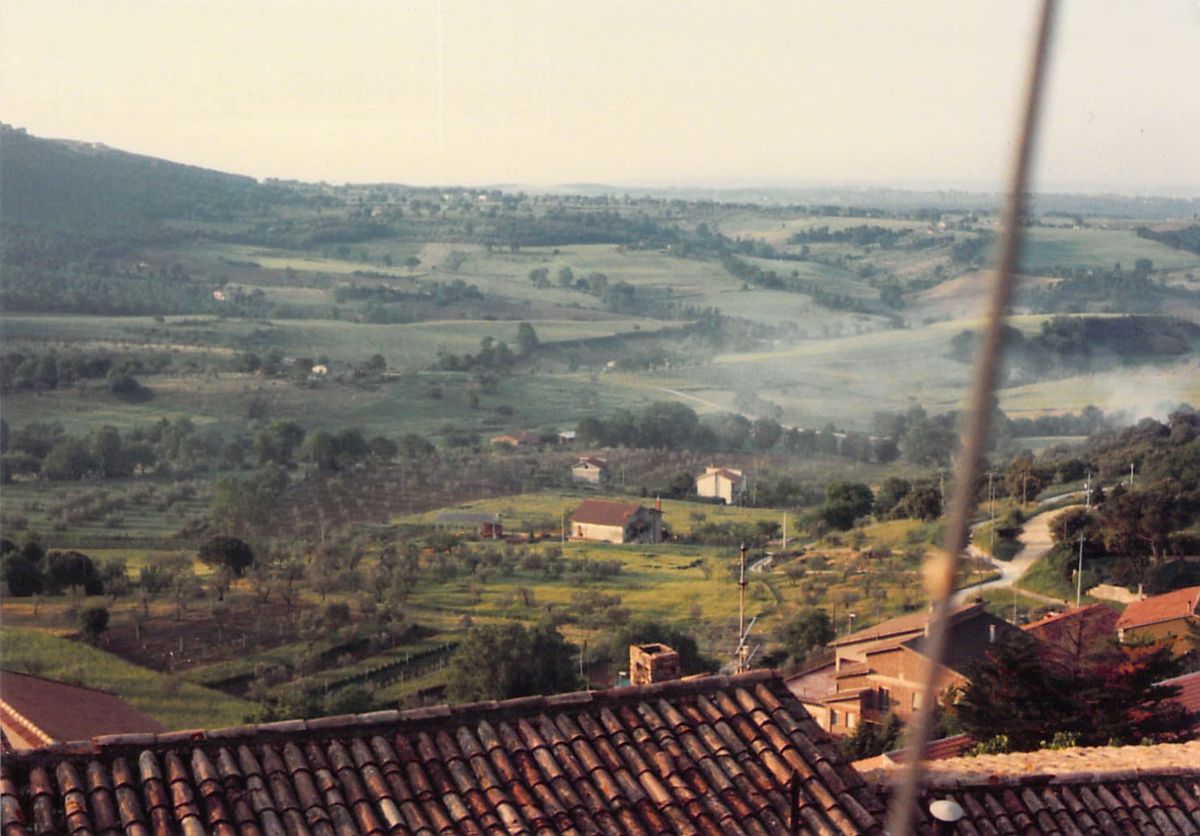
Up before dawn. Espresso from the stovetop percolator, yogurt, bread. To the courtyard to meet the bus at seven sharp. If you were one minute late you found your own way three miles to the site.
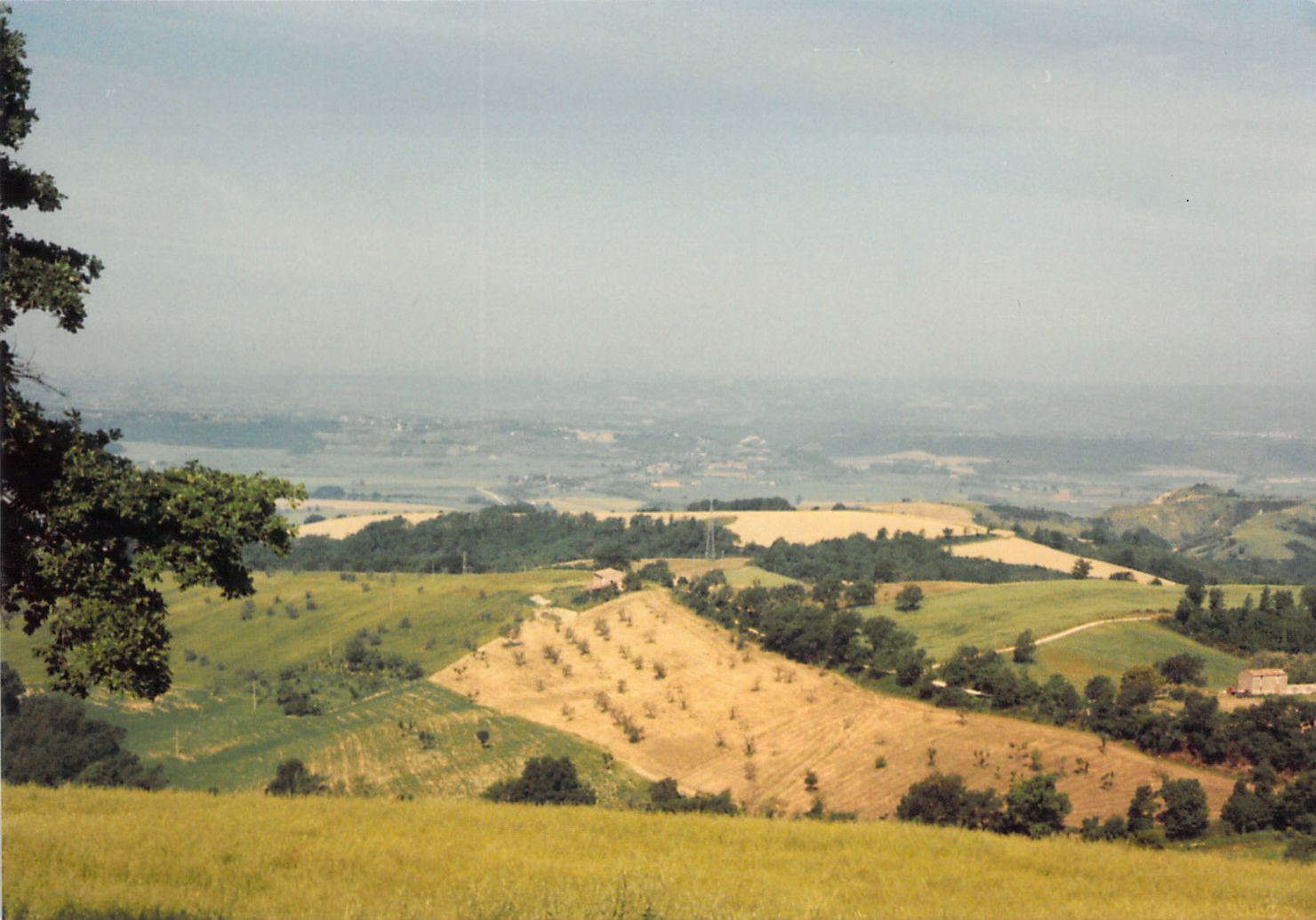
The hill was usually shrouded in fog when we arrived. Looking back toward the Apennines, the sun was a fuzzy disk lurking in the mist, promising the afternoon’s blistering heat. You collect your tools from the shed and head straight into your trench.
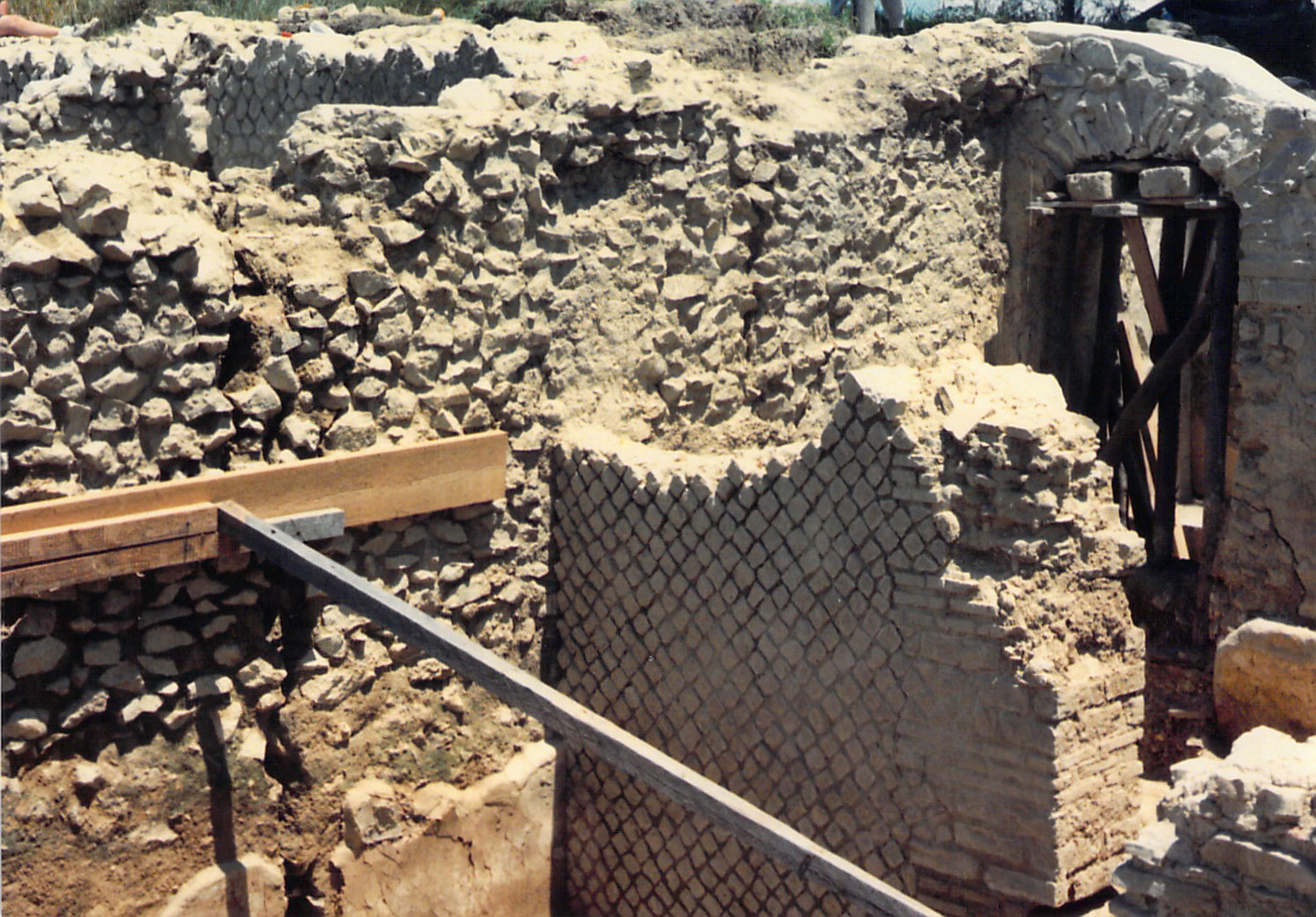
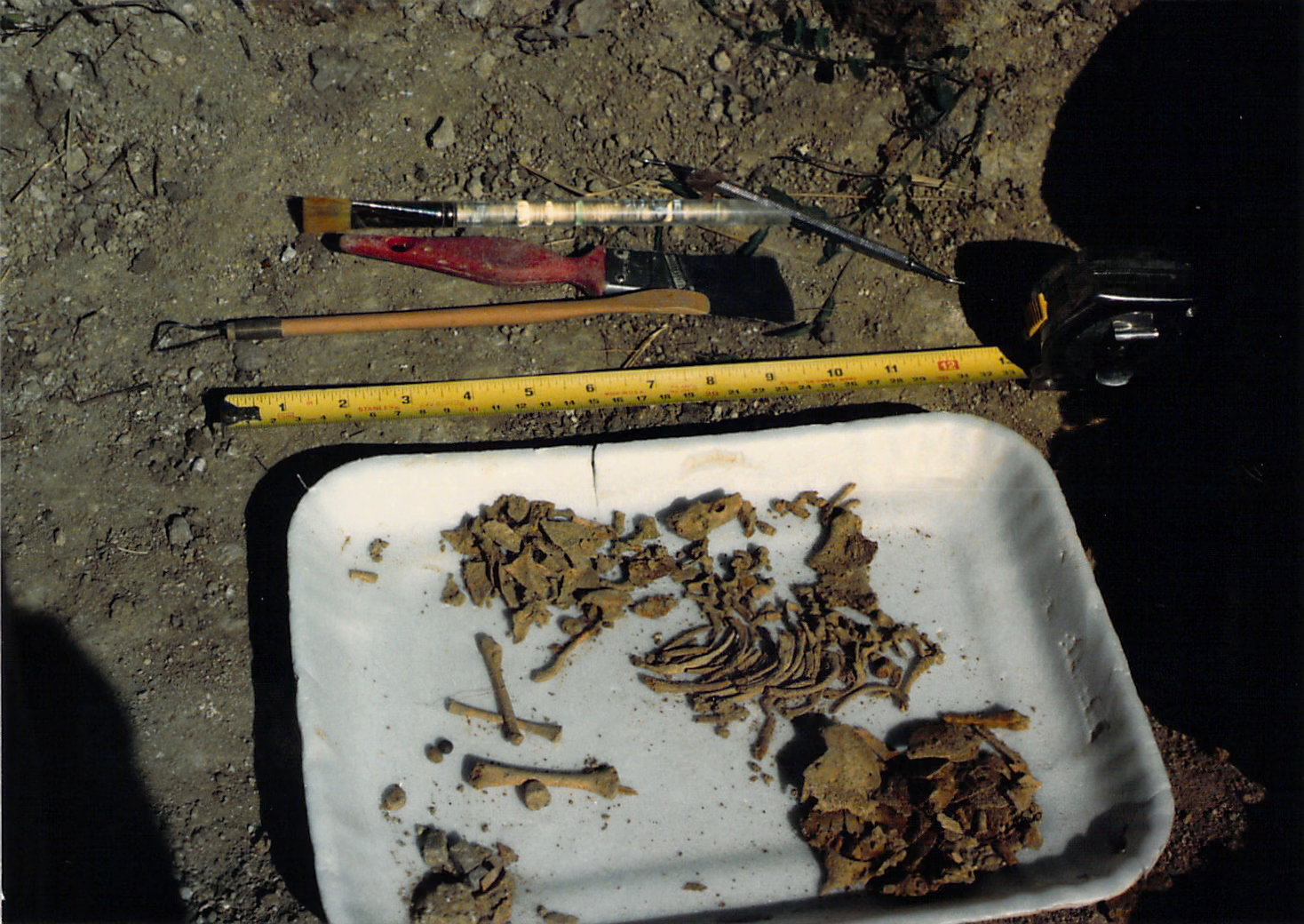
Most days in my trench turned up nothing more than fragmented roof tiles and chunks of mortar. What it lacked in architectural splendor — some people were digging in rooms preserved up to arched doorways — it made up for in the burials, but those only came up about once a week. So the rhythm was simple: swing the pickaxe, fill the bucket, hand the bucket overhead to one of the Italian schoolkids who volunteered their time to the project. They’d dump the soil through a screen looking for seeds, pottery fragments, beads. I’d keep digging.
Most days it was not far removed from digging ditches. We just called it a trench and it had little bits of antiquity strewn through the fill.
Lunch under a sprawling tree that shaded the main atrium of the villa. Italian women from town prepared our meals. Pasta that would normally seem too heavy for a ninety-five-degree day went down easy. Then back to it. Swing, fill, hand up. Repeat. After a dozen or so buckets I’d rest in the shade of the trench while my helper went for water. I’d take notes on the color and consistency of the soil, any patterns on the walls. Strata. Each one with its own story to tell.
The fundamental lesson of archaeology, drilled into us through the demand for copious notes: record everything. Record things that don’t seem to matter. Record too much. You never know what an odd-shaped cobble might mean when it turns out to be the only one of its kind in four years of excavation.
Another find worth mentioning: the earthworms. These were not the country-quaint little fellows you’d string onto a hook. These were three, four, sometimes five feet long. In keeping with custom, they would be dangled into the neighboring trench and dropped onto the head of your fellow archaeologist.
End of the day, pile into the van, filthy and exhausted. Half the crew asleep by the time the five-minute ride was over. Check in your finds at the lab. Maybe stop at the pizzeria for a slice of potato pizza and a beer, at the coaxing of Walter. Shower, hang your head, watch the muddy swirls disappear down the drain, fight the clinging shower curtain — my nemesis all summer.
Then notes. All the field notes had to be transferred onto forms for the months of interpretation that would follow. Archaeology is a destructive science. You only get one shot at recording what you find, because the act of finding it destroys the context. So it was important to take good notes.
Dinner at seven. Archaeologists are by reputation among the liveliest of scientists, and dinner proved it. The food was extraordinary — fresh, smothered in olive oil, accompanied by mineral water and local table wine. After the meal you’d collect your bread and yogurt for the next morning’s breakfast, then retreat to finish your notes or take a walk around town.
The sun went down around 9:30. I went down soon after. About forty minutes of every day was not consumed by archaeological responsibilities. That was the job.
I was want for nothing.
Send this to someone you love. They’ll thank you for it :)